Find articles, news, topics and more...
West Asia tensions are increasing construction and labour costs in India’s real estate sector. Rising energy prices, expensive raw materials, and higher labour charges are putting pressure on project execution, according to industry leaders.
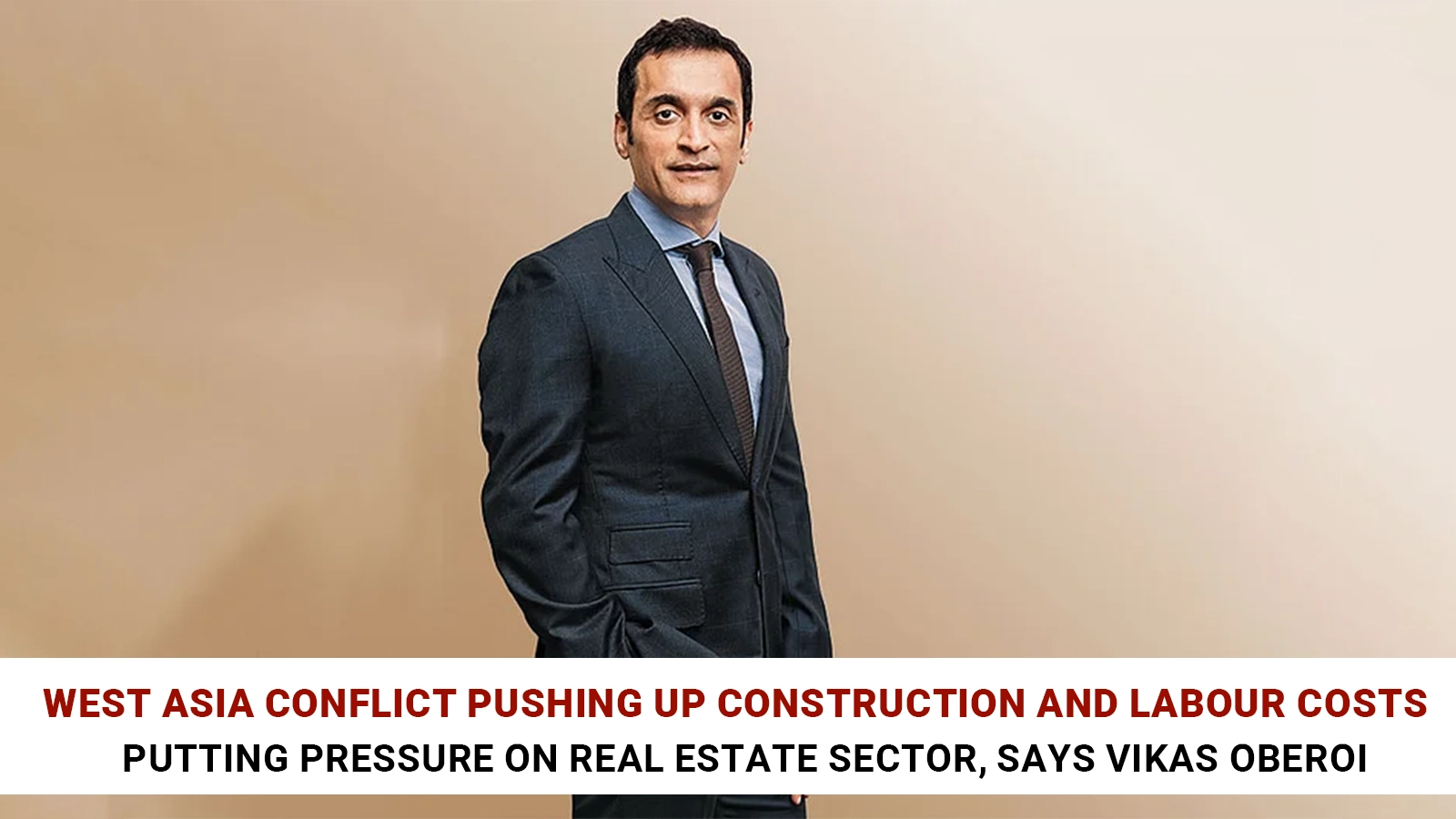
Mumbai-based developer Vikas Oberoi, CMD of Oberoi Realty, said ongoing tensions in West Asia are increasing construction and labour costs in India. He stated that higher energy prices, rising material costs, and labour shortages are putting pressure on the real estate sector.
Speaking during Oberoi Realty’s Q4 FY26 earnings call on May 11, 2026, Oberoi said the impact is being felt across the entire industry and not just by one company.
He explained that rising prices of aluminium, glass, fuel, and labour are making project execution more expensive and challenging for developers.
According to Oberoi, the ongoing West Asia conflict could increase overall construction costs by around 2% to 3%.
However, he clarified that the increase remains within the contingency provisions already included in the company’s project budgets.
Oberoi said the company had planned for potential cost increases, helping it manage current pressure without immediately affecting its bottom line.
Oberoi also highlighted challenges related to material availability and supply chain disruptions. He said global uncertainties are affecting both pricing and the timely delivery of construction materials.
Labour costs have also increased significantly, adding more pressure on developers across the sector.
“These are stressing us out, but it is a problem for the entire industry,” Oberoi said during the earnings call.
He added that almost every real estate company is currently facing similar challenges due to rising costs and supply issues.
On the impact on margins and earnings per share (EPS), Oberoi said the company had already built strong contingency buffers into project budgets.
These safeguards were designed to absorb sudden cost increases and protect profitability.
However, he admitted that these buffers are being gradually consumed as construction and energy costs continue to rise.
Oberoi said the company has now begun factoring in higher future costs across all ongoing and upcoming developments.
“We now know for a fact that there will be a cost increase, and we are factoring that within the projects that we are doing,” he said.
He also confirmed that, although costs are increasing, the rise remains within planned contingencies and is unlikely to affect the company’s financial performance at present.